ReTRACE: Chemically Auditable Large Language Model Agent for Multi-Step Retrosynthesis Planning
Single-step retrosynthesis models have high coverage but uneven validity, and classic tree search couples the planner to one engine and one reward. ReTRACE lets a frozen LLM plan at the route level — proposing, verifying, and restructuring whole synthetic routes with auditable, multi-dimensional feedback.
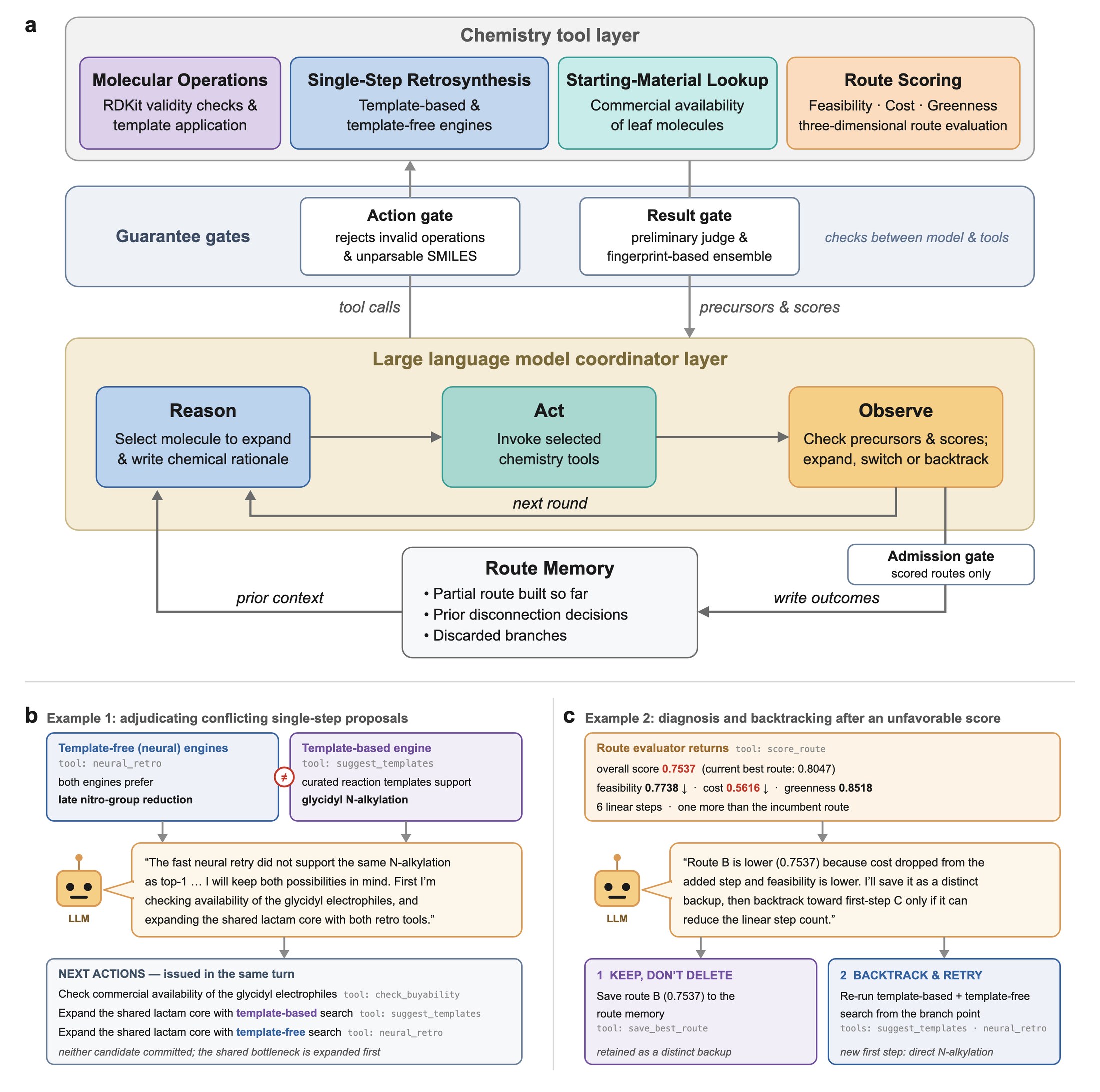
ReTRACE takes a different route: a frozen large language model — no task-specific training — acts as a strategic orchestrator over a harness of chemistry tools: multiple complementary single-step engines, precedent retrieval over literature routes, and a multi-dimensional route evaluator covering feasibility, cost, and greenness. The agent reasons over whole candidate routes, keeps every intermediate decision in an auditable trace, and terminates only when all leaf molecules pass a frozen buyability check against a commercial stock catalog.
Key Ideas
Route-Level Reasoning
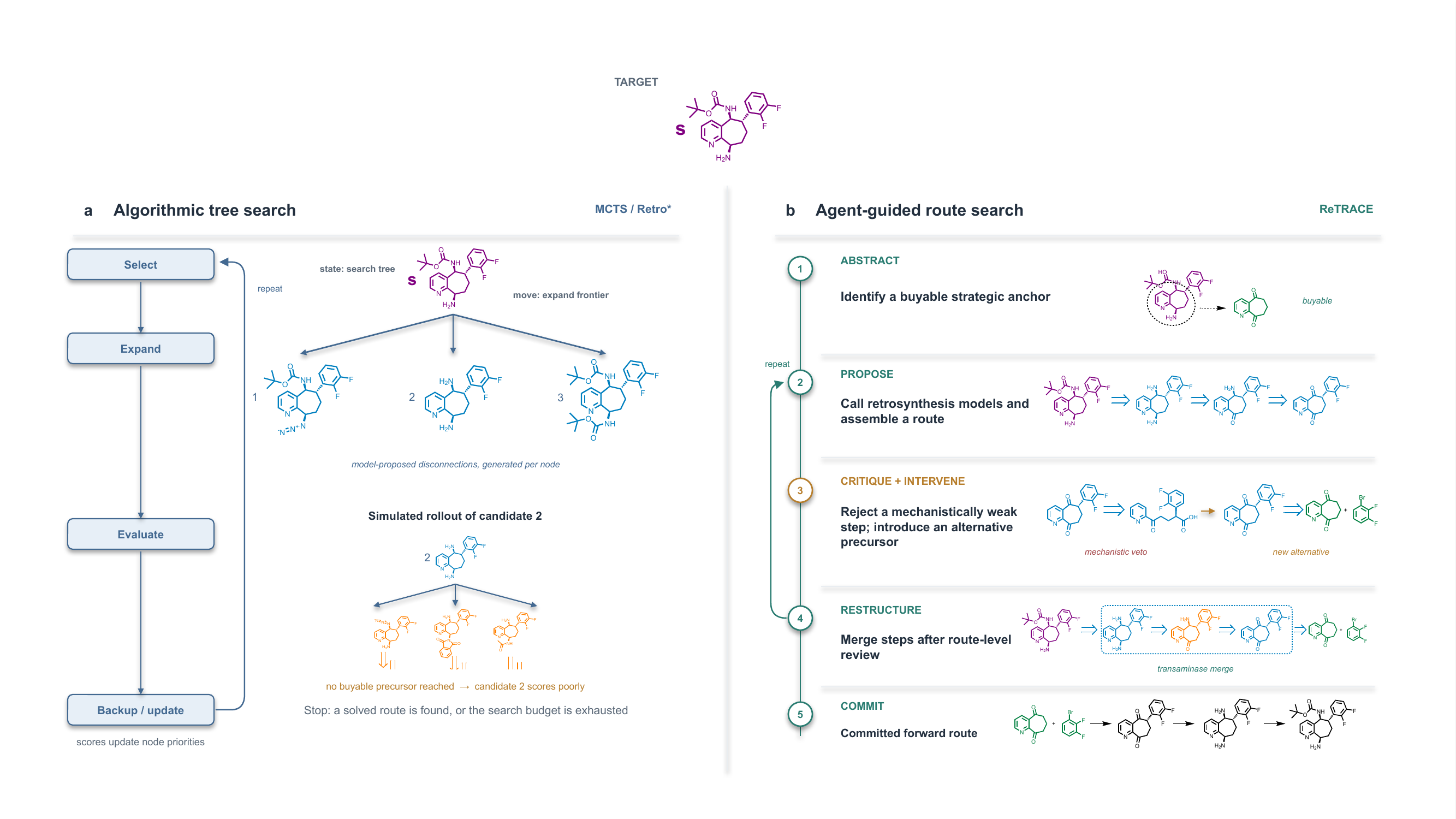
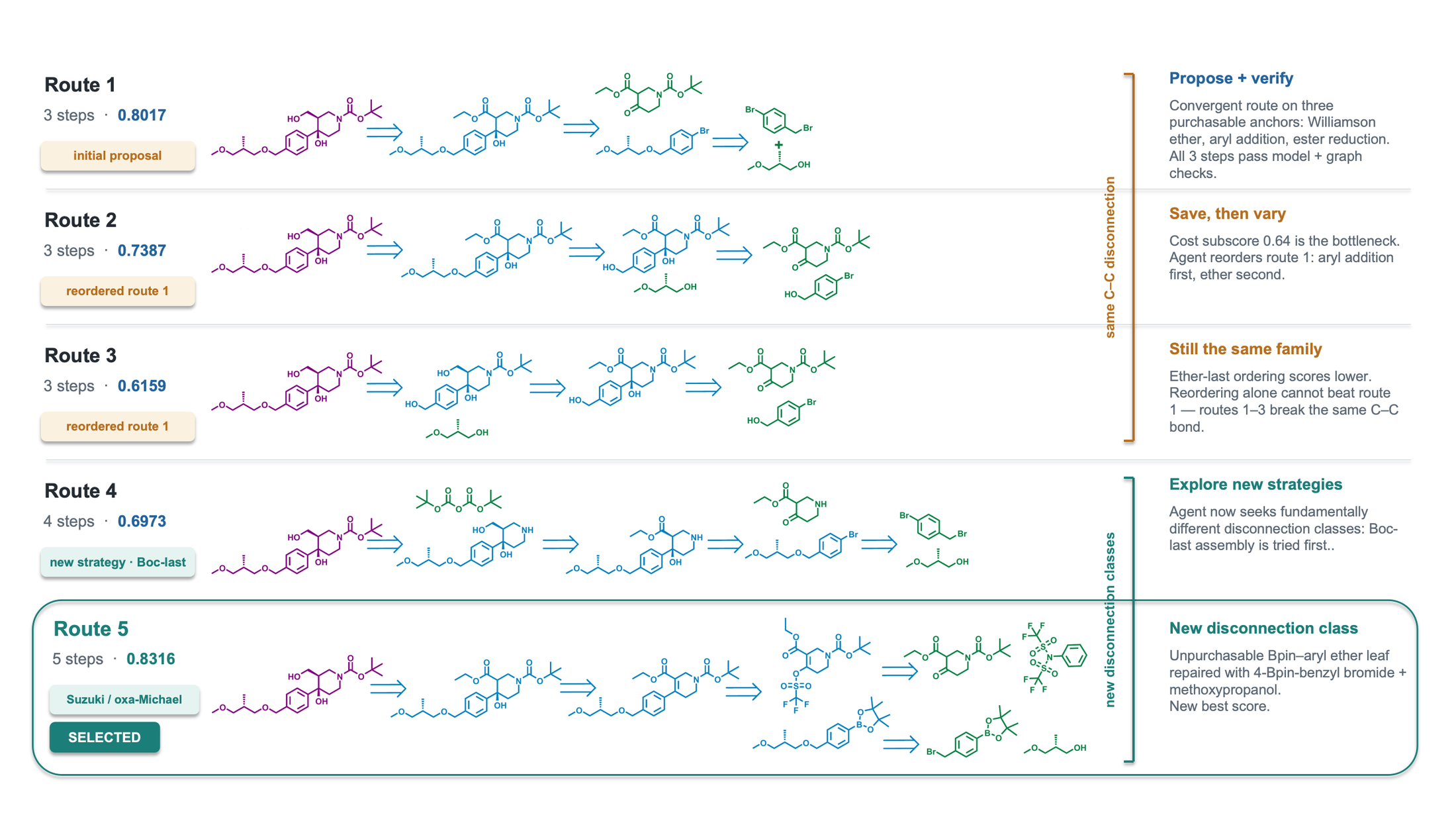
Instead of scoring one bond disconnection at a time, the agent proposes, critiques, and restructures entire routes — it can reject a strategy, switch disconnection classes, and repair non-purchasable leaves.
Frozen Orchestrator
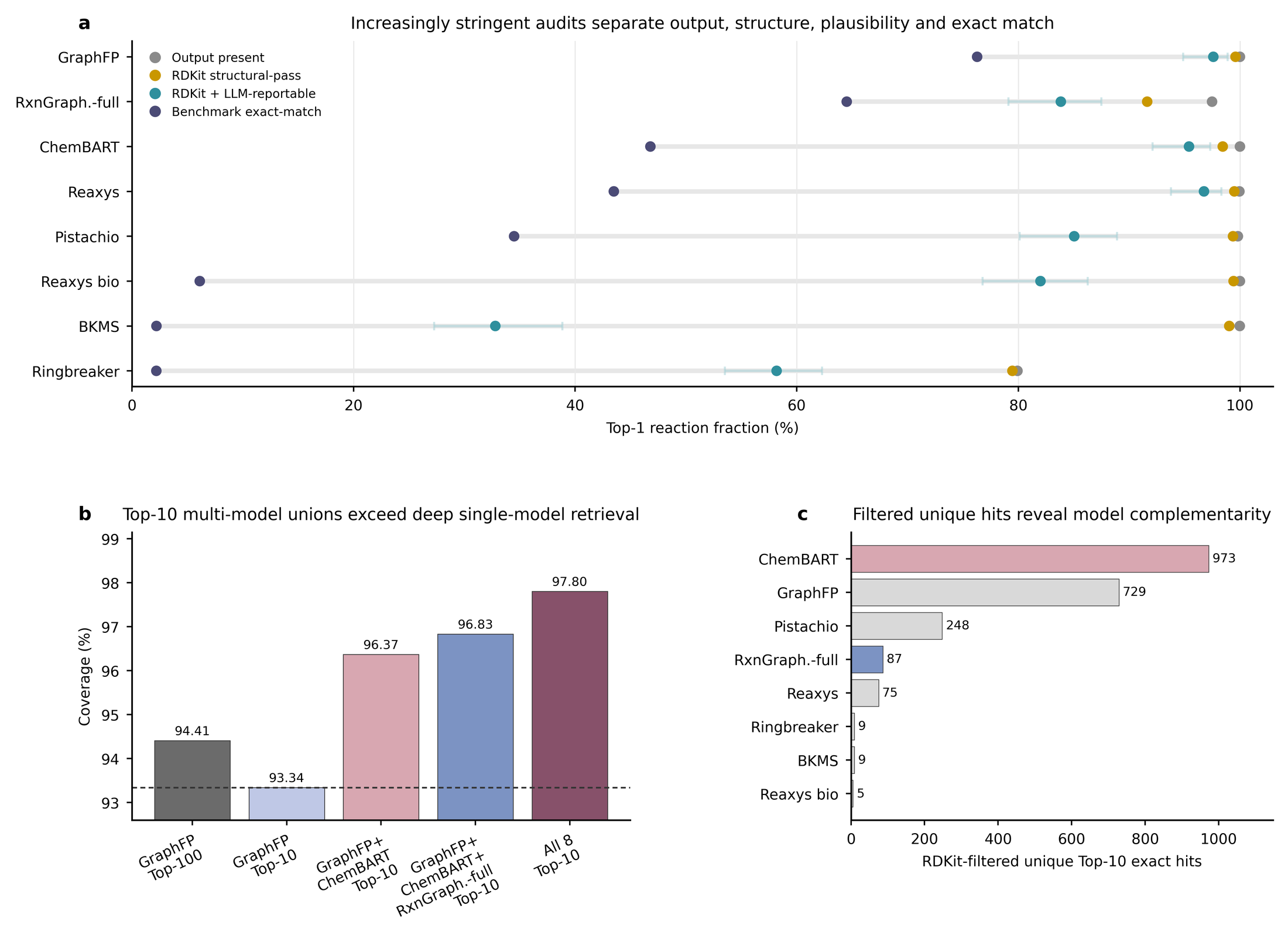
The planner is a frozen LLM — no fine-tuning on reaction data. Chemistry knowledge enters through the tool harness: heterogeneous single-step engines with complementary coverage, plus retrieval over literature precedent routes.
Auditable Evaluation
Every route is scored on feasibility, cost, and greenness, and every accepted route must ground each step in model or precedent evidence. Chemists can inspect why a route was chosen, not just the final answer.
Strict Termination
A route only counts as solved when every leaf is purchasable under a frozen stock catalog — preventing the silent "unsolved leaf" failure mode that inflates success rates in synthesis planning.
Agent Search vs. Classical Tree Search
Why Multiple Engines: Validity ≠ Coverage ≠ Exact Match
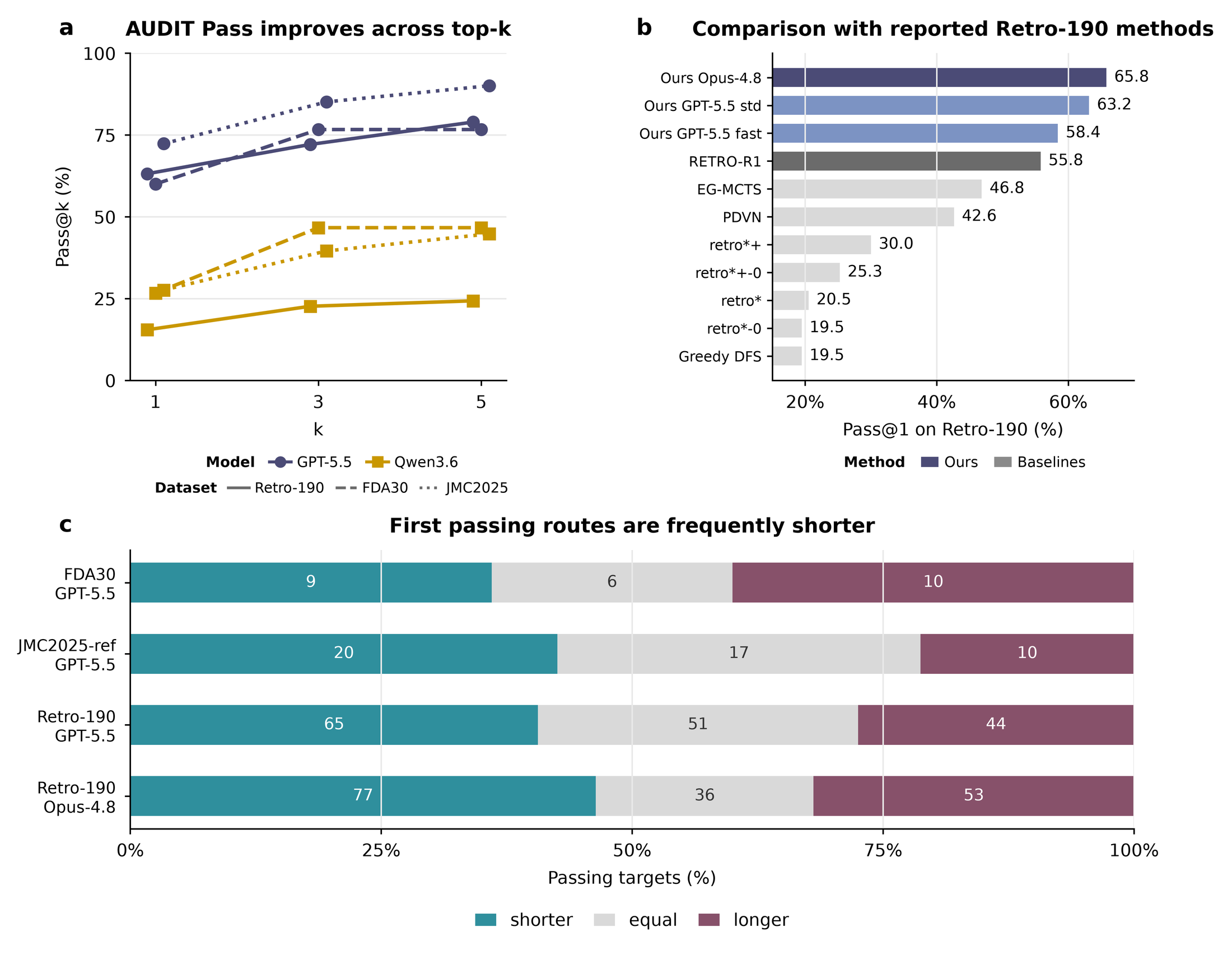
Route-Level Performance
Route-Level Iterative Search
Wet-Lab Validation
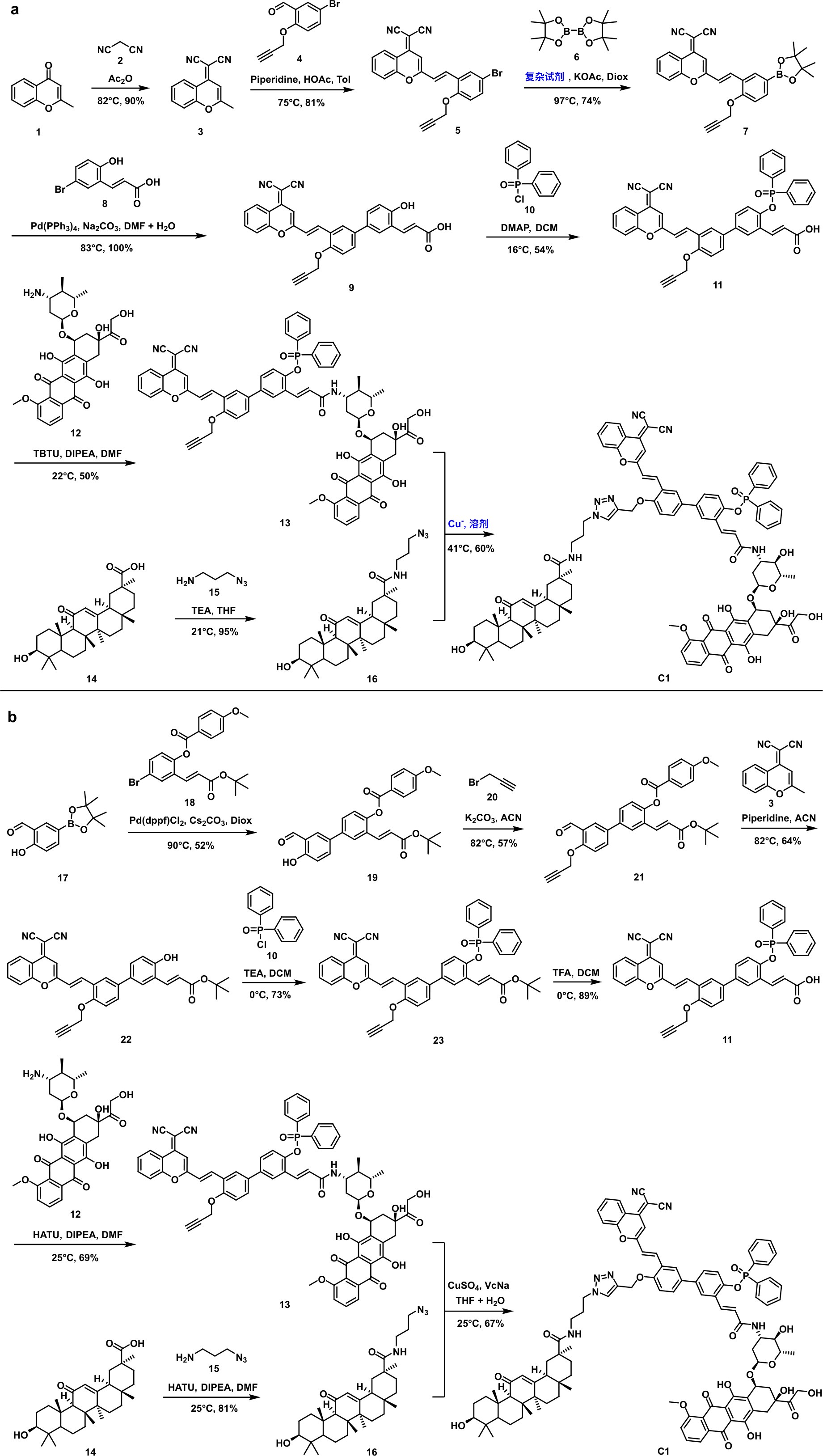
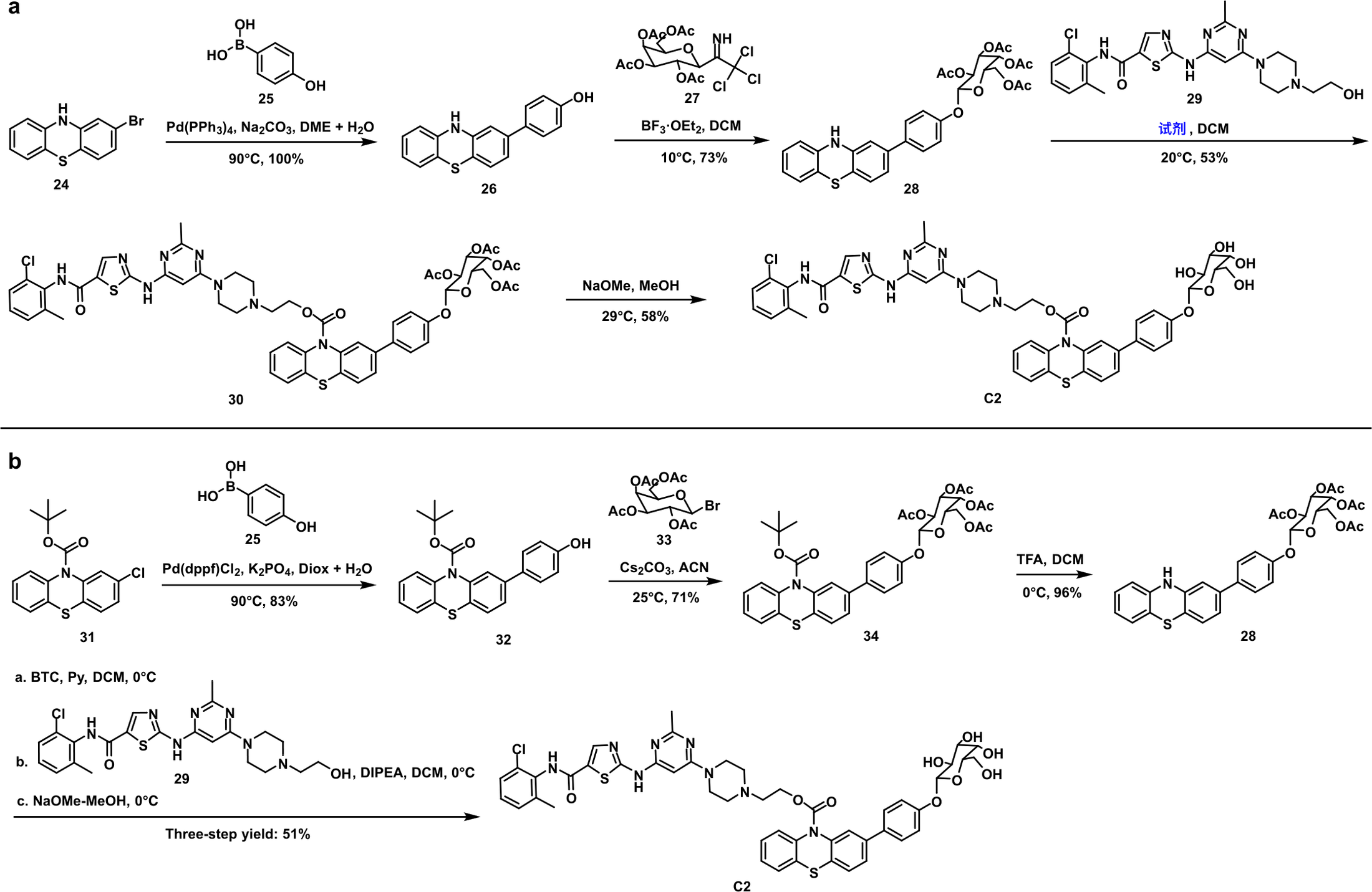
ReTRACE-proposed routes for two target compounds were taken into the lab. The predicted retrosynthetic framework provided the core disconnection strategy and initial plan; bench chemists refined conditions where the prediction had limitations (e.g., a phosphorylation step with a competing free-carboxyl side reaction, and a late-stage Suzuki coupling on a hindered substrate), substantially shortening route exploration.
Status
Manuscript in preparation. The system is evaluated on Retro*-190, FDA30, and JMC2025 with a fixed independent audit protocol, complemented by wet-lab validation of predicted routes and proof-of-concept demonstrations of natural-language steerability (cost-first / green-chemistry-first planning, chemist-feedback revision, and pluggable enzymatic-tool extension).